
A completion date slips, the spare room fills with boxes, or a tenancy ends before the next one starts. Personal storage in Nottingham is a lockable unit you rent for the weeks or months those gaps last, not a second living room. The terms that decide whether it works are how long the belongings stay, how they get in and out, and what the agreement allows.
What Personal Storage Means for Nottingham Households
Personal storage means renting a lockable unit for household belongings you don't need every day, usually for weeks or months, while a home, a move or circumstances are in flux. It works as a pause, so the rental period and access matter more than sheer size.
The Office for National Statistics census visualisation recorded 124,745 households in Nottingham in 2021, including 41,971 one-person households, 33.6% of all homes, alongside about 323,600 residents. One-person homes often have little spare capacity when a tenancy ends, a relationship changes or work takes someone elsewhere.
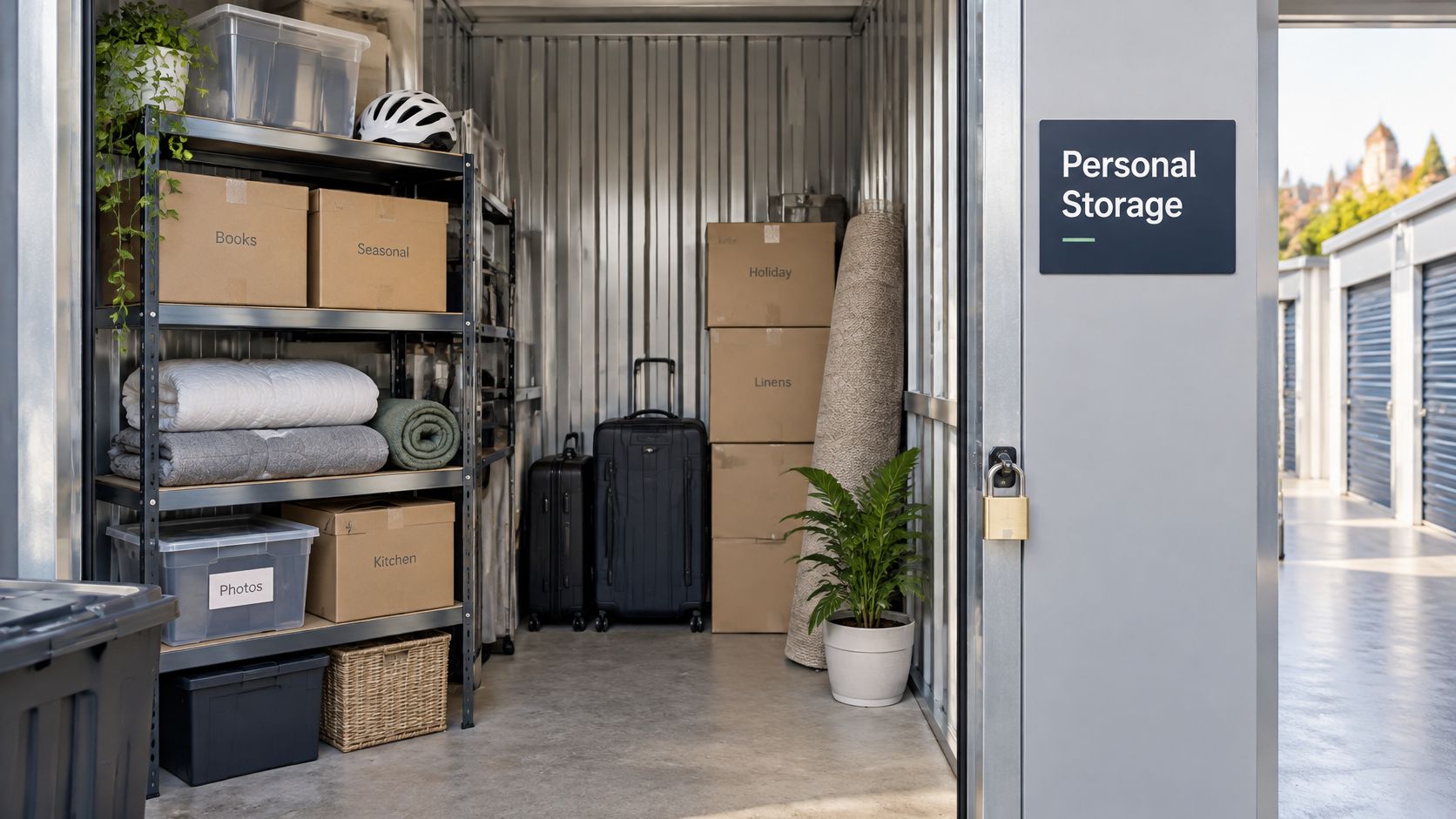
A typical unit has a lockable door and ground-level access, so a car or van can park beside it. Saxondale Self Storage has two sites near Nottingham, St James Business Park in Radcliffe on Trent and Upper Saxondale Business Park, and serves households, students, tradespeople and small businesses. View the unit before you commit.
Seven Situations That Call for Extra Space
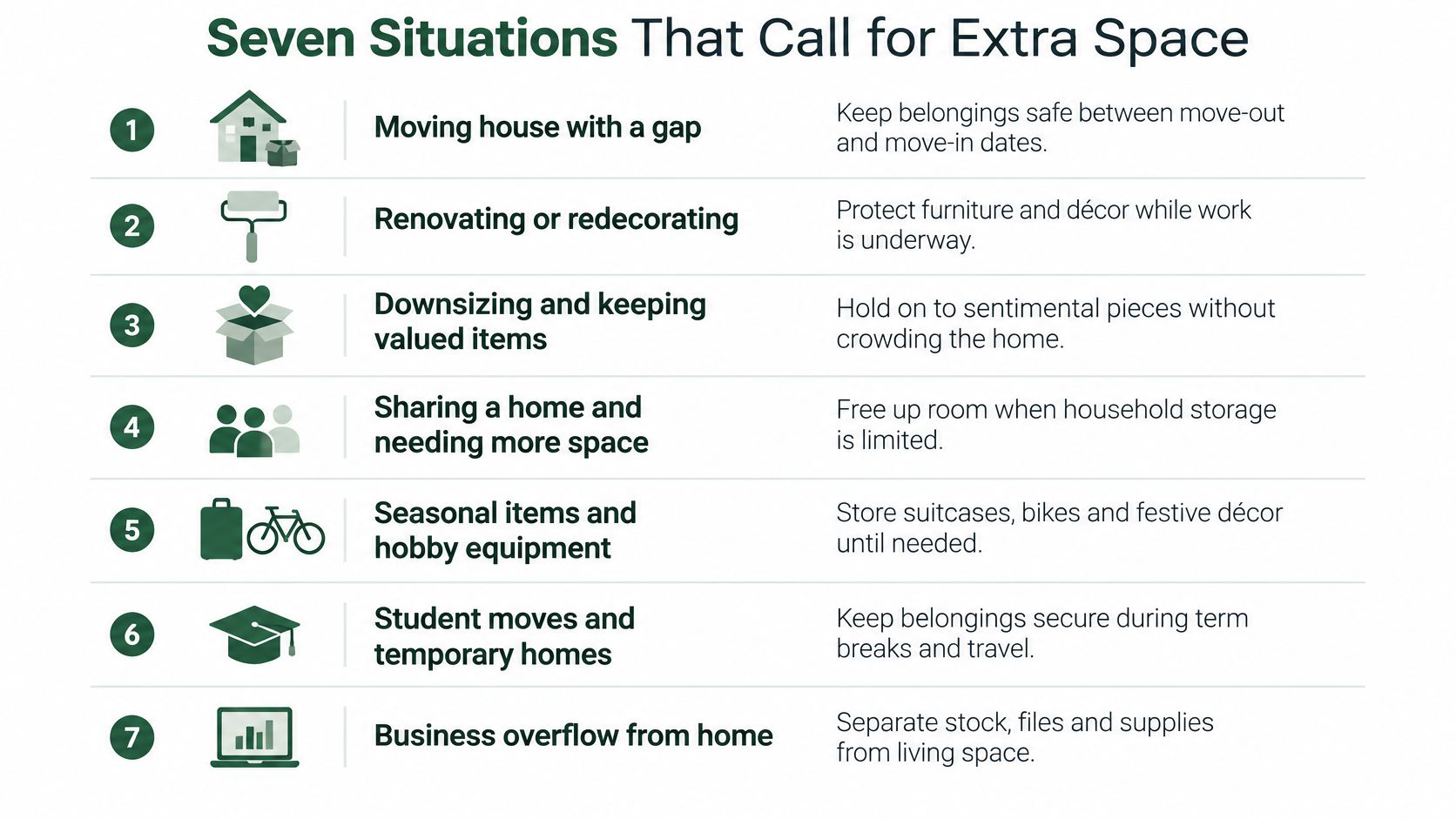
Match the closest row, then check whether the period or the access need changes the booking.
| Situation | Typical storage period | What to plan for |
|---|---|---|
| Moving house with a gap between properties | Days to a few weeks | Clear access on move day and a unit that holds boxes and key furniture |
| Renovating or redecorating a home | Several weeks to a few months | Dry, ventilated space and dust protection for furniture |
| Downsizing and keeping valued possessions | Months to years | Inventory, dry storage and a decision on contents insurance |
| Creating space in a family home | Several months | Easy retrieval and a simple rotation of items |
| Seasonal belongings and equipment | Between seasons, often several months | Bulky items such as garden furniture, bikes and camping kit |
| Temporary accommodation or a life change | Weeks to months | Flexible rolling terms and a lockable unit for the belongings you keep |
| Extended travel or relocation | Several months to a year or more | Long-term terms, careful packing and insurance cover |
Situations overlap. A renovation can force a short move, and the period usually decides between a short booking and a rolling rental. The diagram sets out all seven before the detail below.
Moving House and Renovating a Home
When the dates don't meet
Say a family in Radcliffe on Trent completes two weeks before the new home is ready. Paying for two houses, or living out of boxes in a relative's hallway, is the usual alternative. Storage for moving house works as a holding point. The van unloads straight into the unit, and the old house is clear for cleaners.
When the rooms themselves are the problem
Kitchens, floors and plastering spread dust and moisture. Furniture needs to leave the rooms being worked on and stay dry and covered. Book the unit before the strip-out, photograph what goes in, and keep a clear path to the door.
Practical rule: Size the unit from the rooms you are clearing, not from the whole house, and add a buffer day for the move back.
The mistake is booking only to the expected finish date. Overruns are common, and a monthly booking absorbs them more cleanly than a term that ends on the decorator's first estimate.
Downsizing, Family Space and Seasonal Belongings
A couple leaving a family house for a flat can keep a sideboard, a piano and boxes of photographs while they see what fits. The check is simple. If you would regret selling it this month, store it and decide later. Furniture storage in a dry, ventilated container suits full sets better than a damp garage.
A growing household often needs a room back. A spare room becomes a nursery, or a teenager's bedroom becomes a study. The cot, the desk and the old toys go into extra storage space until someone needs them again. Count how often you'll fetch them. If that's monthly, put those boxes at the front.
Garden furniture, bikes, camping kit, winter coats and Christmas decorations take floor space for most of the year. If an item sits unused for a whole season, and damp or bulk is the risk, a sealed box between seasons beats crowding the landing. Longer stays need an inventory, a dry spot and a clear decision on insurance for anything you'd hate to replace.
Matching Belongings to Unit Size and Access
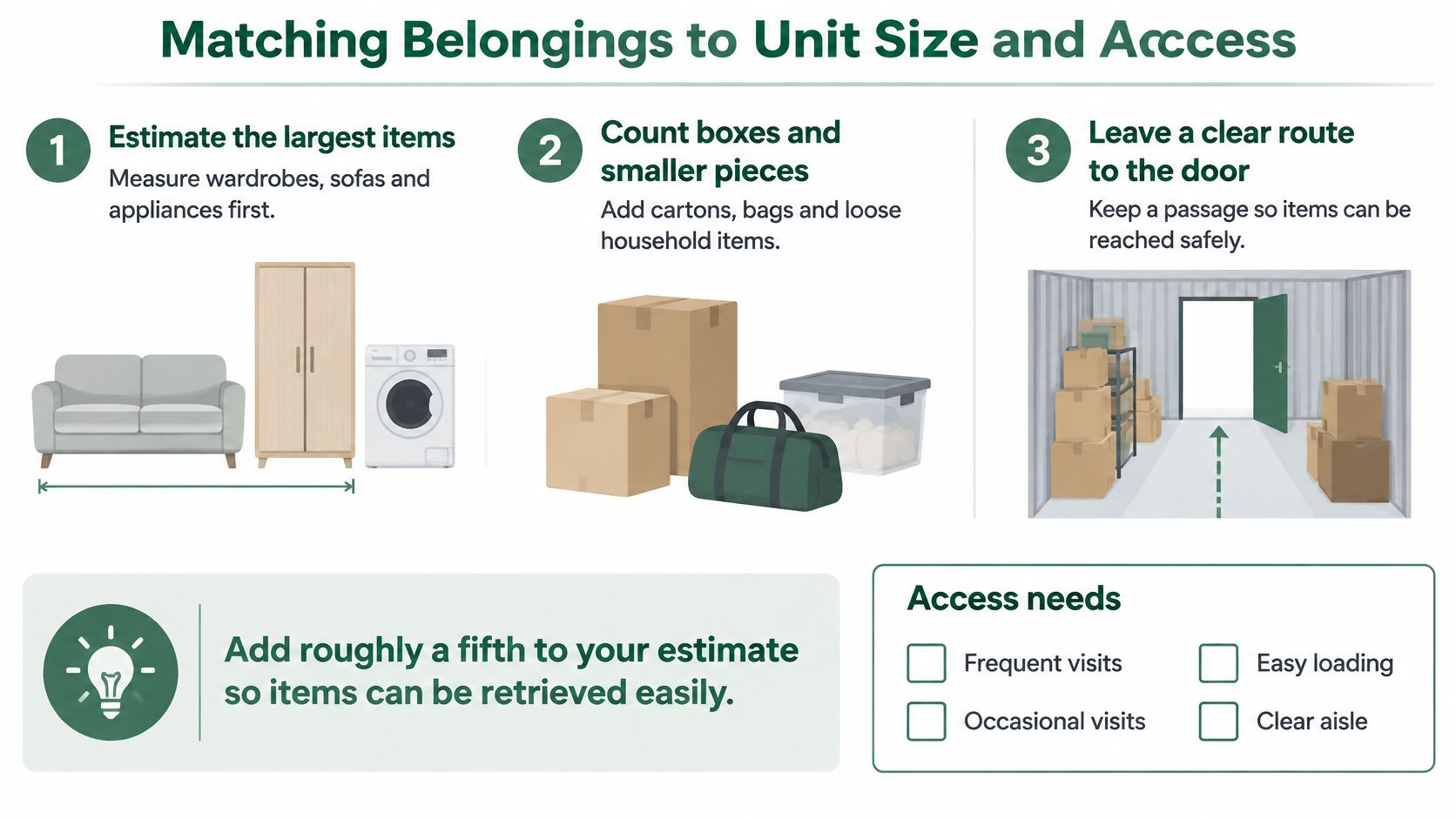
Estimate the largest items first, then count boxes, and leave a route to the door. Add roughly a fifth so you can reach things without shifting the lot.
A 10ft unit of about 80 sq ft suits a concentrated set of boxes and smaller furnishings. A 20ft unit of about 160 sq ft is roughly double the floor area, which fits bulky contents or a shared load. Storage unit sizes and prices are the place to compare the two before you book.
| Belongings | Storage condition | Access or handling point |
|---|---|---|
| Sofas, beds and wardrobes | Dry space, wrapped to avoid scuffs | Load straight from the van and avoid stairs |
| Boxed records and paperwork | Dry, off the floor and labelled by year | Keep a box index for quick retrieval |
| Electrical appliances | Dry, drained and with cables secured | Keep upright and protect from moisture |
| Bicycles and garden tools | Clean, dry and oiled metal parts | Place near the door for easy retrieval |
| Trade tools and materials | Secure and sorted by job or type | Keep frequently used items near the front |
| Seasonal kit such as camping gear and decorations | Sealed boxes away from damp | Store nearest the door for the season |
The Health and Safety Executive manual handling guide advises trolleys and sack trucks for heavy or awkward items, and loading close to where items are needed. There is no universal safe lifting weight. The Manual Handling Operations Regulations require hazardous handling to be avoided where reasonably practicable, and the remaining risk reduced. Park beside the door. Both Saxondale sites take cars, vans and small trailers, not HGVs, and access runs 7am to 7pm daily.
Student Moves, Temporary Homes and Long Trips
The University of Nottingham employer EDI analysis reported 36,491 registered students for 2024/25, including 8,725 international students, 23.9% of the total. Students changing rooms between years often need a holding point for furniture, bikes, books and kitchenware. International students usually can't ship that home.
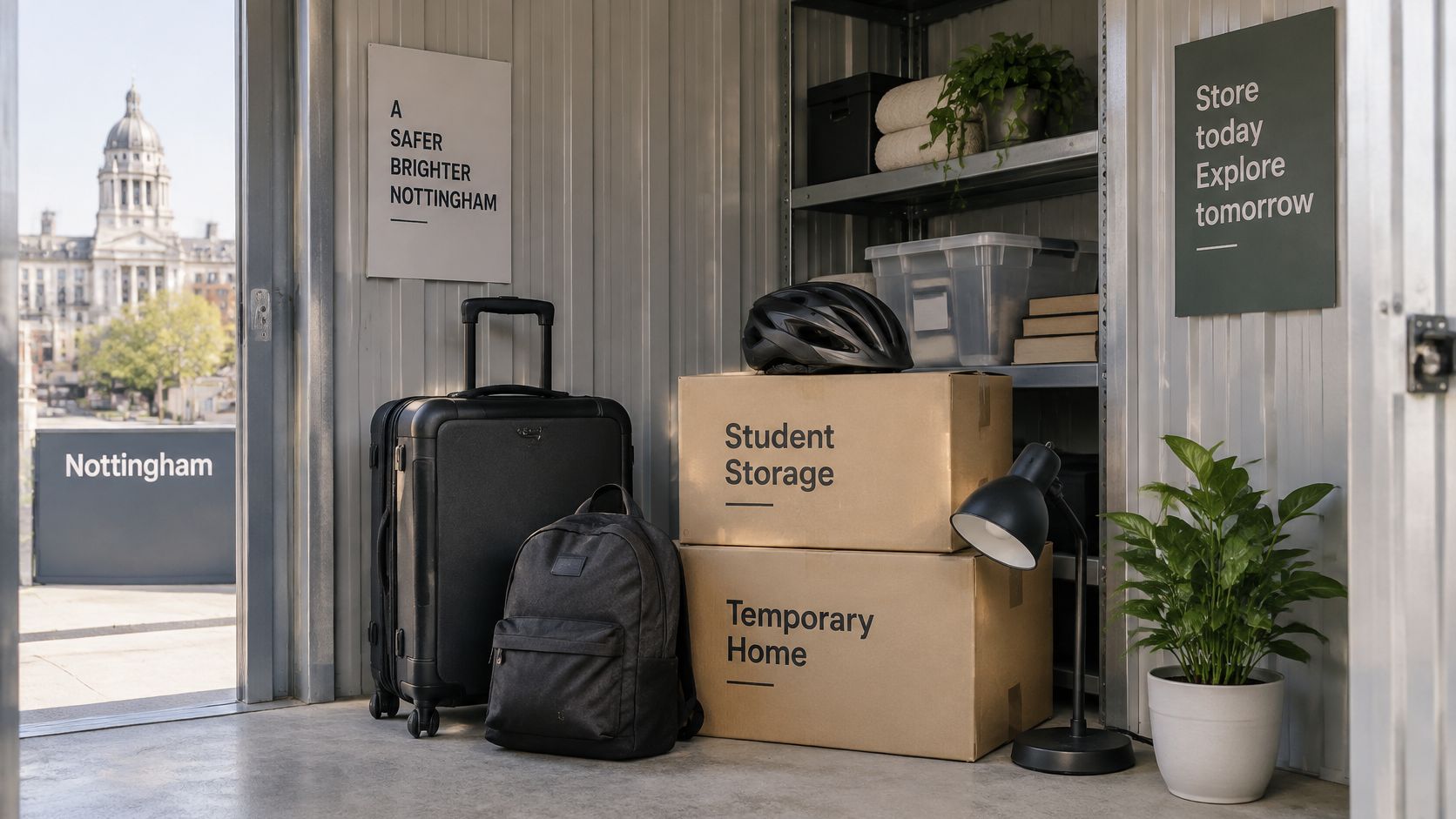
Label every box, keep a photo inventory, separate fragile or moisture-sensitive items, and leave an aisle. Housemates can share a unit. Put the cost split, named access and the insurance decision in writing. Student storage bookings should follow move-out and move-in days, not an assumption of overnight access.
Self storage for personal belongings beats the alternatives when the car won't take the load, the landlord won't hold furniture in an empty house, or a smaller room has no floor left. Taking items home wins when a car and a willing household can absorb them. Leaving goods in the tenancy only works if the landlord agrees in writing.
The same test fits a relationship split, a short placement, a stay with relatives while a sale completes, or a long trip. If the gap runs for months and the goods must stay secure and separate, a rolling rental is the cleaner choice.
Rental Terms, Costs and Restrictions to Check
Secure personal storage covers household, business and similar goods. Anything illegal, dangerous, flammable, perishable or living is barred, along with anything that could damage the property or other customers' goods.
Three details decide whether a term suits you:
- Vehicles stay out. Cars, quad bikes and motorbikes are all barred, as is anything that could leak fluid, so arrange vehicle storage elsewhere.
- Cover sits in the agreement. Insurance for stored goods is set out in the storage agreement itself. Read the schedule before assuming instruments, records or good furniture are covered for their full value.
- Budget the whole move. Monthly hire is only part of it. Add the refundable £40 padlock deposit, packing materials and the van before you compare options.
Then run the figures. Units start from £110 a month including VAT, and the first month is half price, so a single month at that rate costs £55 plus the deposit. Three months comes to £275 before the deposit. Terms carry a one-month minimum, so a short gap between homes still bills for the full month. I would ask how notice works and whether unused days are refunded before signing.
Give access the same scrutiny as price. Confirm opening hours, what applies outside them, and who can be named on the unit. Only two container sizes are offered, so ask what happens if your first estimate runs short.
Frequently Asked Questions About Personal Storage in Nottingham
How long can I use a storage unit?
Saxondale Self Storage has a one-month minimum hire, with rolling terms for longer stays. Before booking, check the notice period and how it affects your planned end date.
What should I bring to a viewing?
Bring an estimate of your largest furniture pieces and box count, plus the dates you expect to move items in and out. This helps you assess whether one of the two container sizes will suit your belongings and access needs.
Can I change unit size after booking?
Contact the team to ask whether a different-sized container is available at your site. Saxondale Self Storage offers two sizes, and a swap depends on availability. If your needs are uncertain, ask about options before committing.
What size do I need for a one-bedroom flat?
List the largest furniture first, then estimate the boxes and leave room to reach items you may need. Compare that load with the two available container sizes rather than relying on the flat's floor area alone. If neither seems suitable, contact the team to discuss your requirements.
How do I ask a question or arrange a viewing?
Call 0300 124 7544 or email info@saxondaleselfstorage.co.uk. The team aims to reply to booking and viewing requests within one working day, but cannot guarantee a response within that time.
Book Once You Know Your Size and Term
- Confirm the situation and how long the belongings need to stay.
- Estimate the largest items and the number of boxes.
- Check that a car, van or small trailer can load beside the door inside daily access hours.
- Read the insurance wording and set a budget. Storage units start from £110 a month including VAT, with a first month at half price, plus the refundable £40 padlock deposit, packing and the van.
- Choose St James Business Park or Upper Saxondale, pick a move-in date, and request a viewing. You can also check availability online before you commit.
Phone 0300 124 7544 or email info@saxondaleselfstorage.co.uk. Saxondale Self Storage aims to reply to booking and viewing requests within one working day, though that isn't guaranteed. Prices and free units are confirmed on the Saxondale site.
Saxondale Self Storage offers ground-level container storage for household moves, renovations, student gaps and business overflow at two sites east of Nottingham. If personal storage in Nottingham matches the period and the access you need, explore current sizes and availability with Saxondale Self Storage.