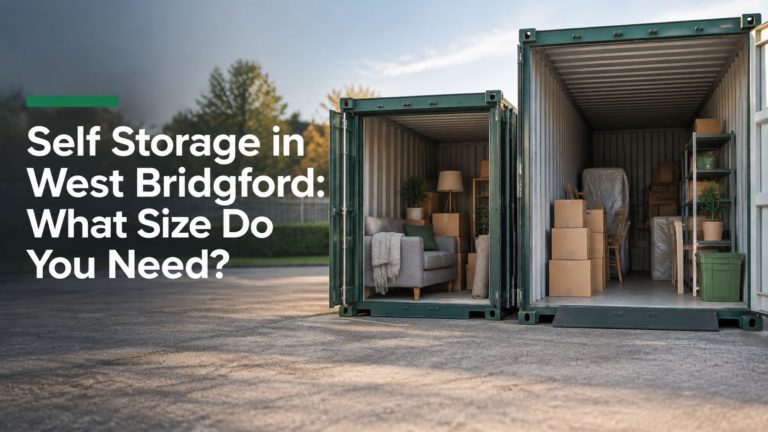

Flexible business self storage suits smaller firms needing room for stock, tools or records without staff, pallet movement or regular deliveries, while warehouse rental suits operations needing staff workspace, forklifts and frequent dispatch. That distinction matters when spare rooms, garages and shop floors fill up and the next step looks like expensive premises. Business storage in Nottingham shouldn't be chosen on rent alone. Permitted use, loading, commitment length and total overheads decide whether a unit solves the problem or creates another one.
The Short Answer for Nottingham Businesses
Business self storage fits small, boxed or occasionally retrieved stock, equipment and records when nobody needs to work from the space. Warehouse rental in Nottingham fits when pallets, forklifts, staff or daily dispatch form part of normal trading.
At the start of 2025, the UK had 5.7 million private-sector businesses, including 5.64 million small businesses with 0 to 49 employees, according to the Department for Business and Trade business population estimates. Most firms therefore don't need premises built for a larger operation.
Apply three tests before signing anything.
- Space and permitted use: Will goods be stored, or worked on and dispatched?
- True monthly cost: Compare totals over 3, 6 and 12 months, including deposits and overheads.
- Operational fit: Check loading, staffing, access and delivery rules.
Contracts differ between providers and landlords. Check written terms, not sales descriptions, before committing.
Business Self Storage and Warehouse Rental Compared
Use this comparison as a checklist against written quotes for business storage in Nottingham and any warehouse lease.
| Factor | Business self storage | Warehouse rental |
|---|---|---|
| Space requirements | Individual units sized to contents | Larger floor areas sized by lease |
| Rental commitments | Rolling monthly terms, check minimum term | Fixed lease, check break clauses |
| Upfront costs | First payment plus any deposit | Deposit, possible fit-out and legal costs |
| Business rates | Confirm occupation basis with the council | Usually occupier's cost, confirm with council or VOA |
| Access and loading | Ground-level or drive-up access per site terms | Yard, roller shutter or dock per building |
| Utilities and maintenance | Often included or minimal, check terms | Often tenant's cost, check lease |
| Staffing and workspace | Storage only, no staffed workspace | Staff and operations allowed within permitted use |
| Inventory management | Manual handling for boxed or static stock | Racking, pallets and systems possible |
| Flexibility to expand | Move unit or add another unit | New lease or extension negotiation |
| Insurance and permitted use | Stored-goods cover often separate, restricted activities | Cover and use set by lease |
Two rows change the decision most often. Business rates turn on how space is occupied, so confirm the position with the local council or Valuation Office Agency rather than assuming a unit is exempt. Insurance is commonly separate cover or an add-on, not automatic protection for every item stored.
Self storage buys flexibility. A warehouse buys control over the operation, at the price of commitment.
Neither advantage is free. Flexibility can mean no workspace, no dock and no staff facilities. Control can mean repairs, utilities and rent during quiet months.
When Self Storage Is the Better Option for Nottingham Businesses
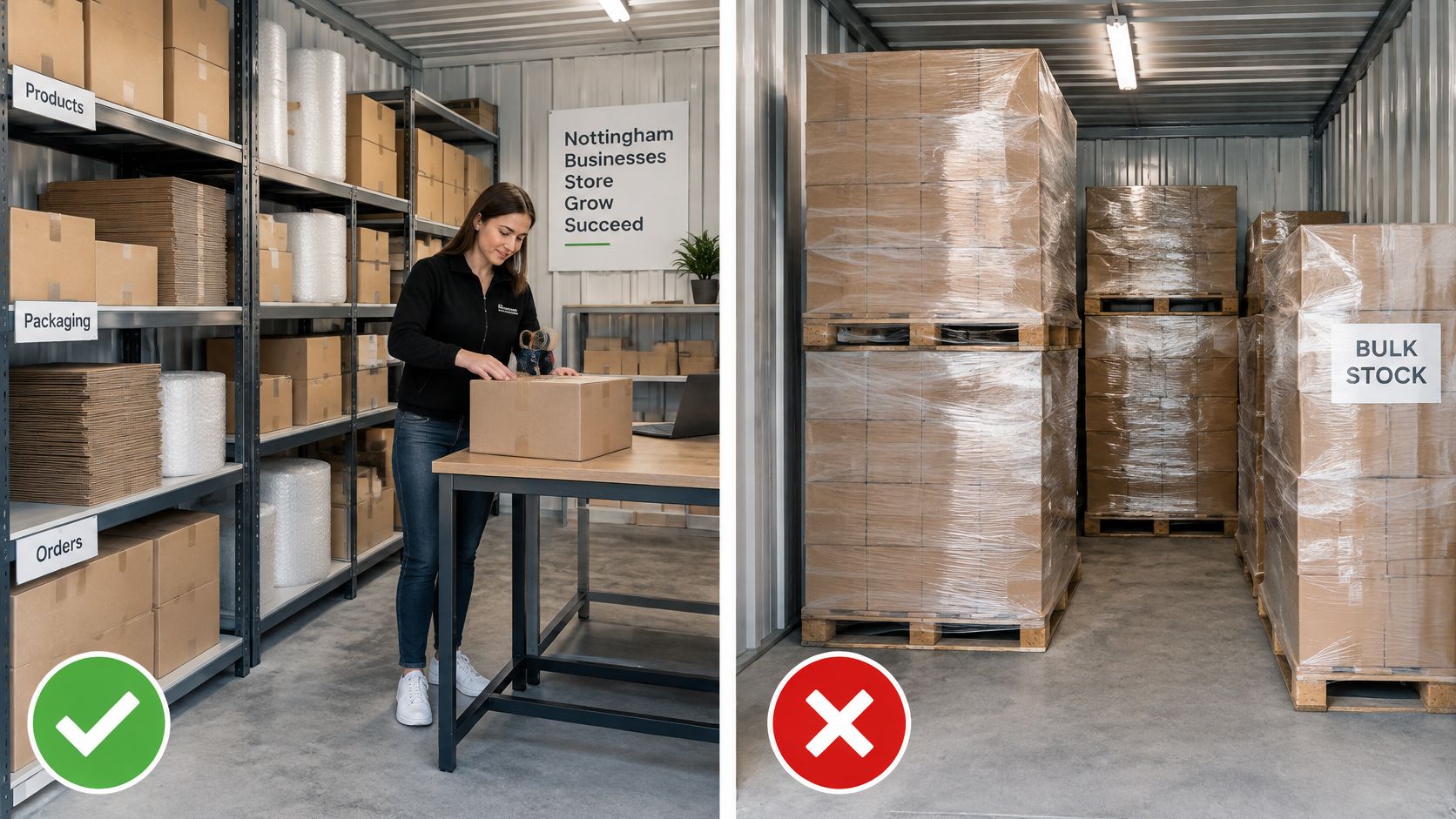
- Online retailer with boxed products: Works when stock and packaging are collected in small batches for packing elsewhere. Fails when staff pick, pack and hand parcels to couriers from the unit all day.
- Tradesperson with tools and spares: Works for loading a van at ground level and keeping backup kit off the driveway. Fails for cutting, fabrication or any workshop activity.
- Retailer with seasonal overflow: Works for decorations, sale stock or bulk buys held before a peak. Works poorly when shelves need restocking several times a day.
- Events business with stands and banners: Works when kit packs down and moves by car or van. Fails when staging needs dock loading or assembly space.
- Business between premises: Works as a short bridge for furniture and surplus while a fit-out finishes. It isn't a trading address during that move.
Practical rule: Storage fits when goods are kept safely, retrieved occasionally and not worked on, sold from or dispatched daily at the unit.
Permitted activity still rests on facility rules and the signed agreement.
When Renting a Small Warehouse Makes More Sense
Start with one threshold question. How much stock moves in and out each week, and how many people must handle it? Volume of movement usually matters more than total stock held.
A warehouse makes more sense with regular pallet movements, forklift operations needing headroom and safe routes, or dedicated staff workspace for packing and administration. It also fits high-volume dispatch with several collections daily, large inventory needing racking and stock systems, and buildings with docks, yards or temperature control.
Say a wholesaler receives pallets three times a week and breaks them down for trade orders. A storage unit can't provide that working operation. A small manufacturer faces the same limit because production isn't storage.
Loading risks remain either way. The Health and Safety Executive load security guidance says risks must be managed for loading, transporting and unloading goods, including vehicle and pedestrian separation, manual handling and items falling from a vehicle.
Exceptions exist. High stock with few movements can still suit commercial storage units in Nottingham. Frequent movements without staff premises may suit third-party fulfilment better than a lease.
Storage and Warehouse Costs Over 3, 6 and 12 Months
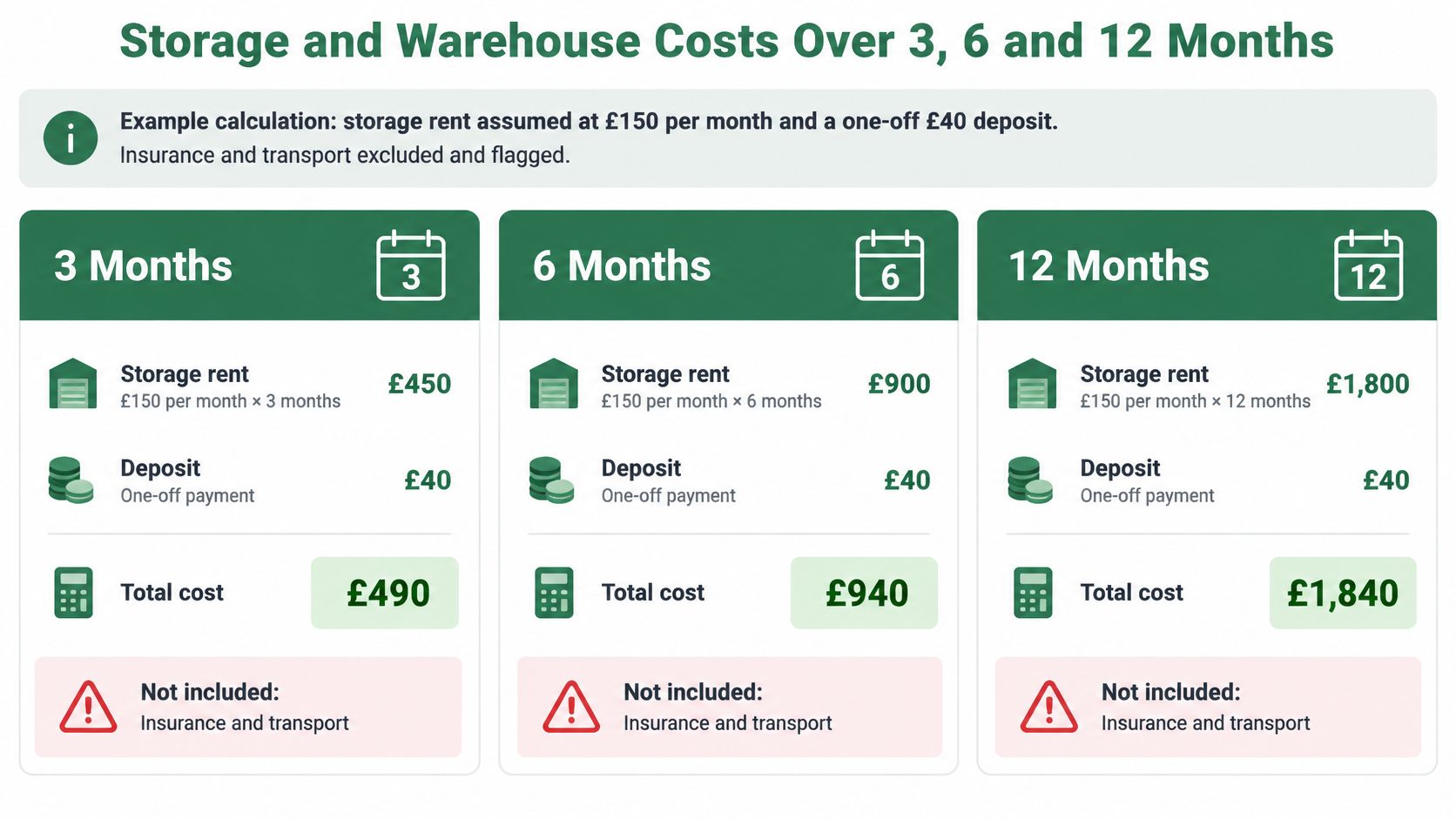
Assume a 20ft container at £149 per month including VAT and a one-off £40 padlock deposit, refundable when the padlock is returned and the unit is left in good condition. Insurance and transport sit outside these figures, so price them separately before deciding. The smaller 10ft unit runs at £110 per month including VAT, and both sizes are listed on the storage unit sizes and prices page.
| Cost item | 3 months | 6 months | 12 months |
|---|---|---|---|
| Storage rent at £149 per month | £447 | £894 | £1,600 |
| First month at half price | -£74.50 | -£74.50 | -£74.50 |
| Padlock deposit | £40 | £40 | £40 |
| Storage total before insurance and transport | £412.50 | £859.50 | £1,600 |
| Warehouse rent with VAT, rates, utilities and service charges | Quoted monthly total x3 | Quoted monthly total x6 | Quoted monthly total x12 |
| Warehouse insurance | Quoted premium for term | Quoted premium for term | Quoted premium for term |
| Transport and handling for either option | Miles and labour for term | Miles and labour for term | Miles and labour for term |
A warehouse bill itemises what the storage price absorbs. Rent is only the first line, with VAT where it applies, business rates, utilities and service charges stacked on top. Saxondale units carry one monthly figure, and insurance for stored goods is covered in the storage agreement, so check that agreement rather than double-counting cover.
Fixed overheads bite hardest when sales dip. A lease charges for empty floor space every month of its term, while a container can scale up or down with stock. The trade-off runs the other way too: a unit costs more per square foot than warehouse space at volume, so the premium buys flexibility rather than the cheapest floor. For a known 12-month need, the annual upfront payment option listed alongside monthly bookings is worth comparing against the rolling total above.
What Business Storage Can and Cannot Hold
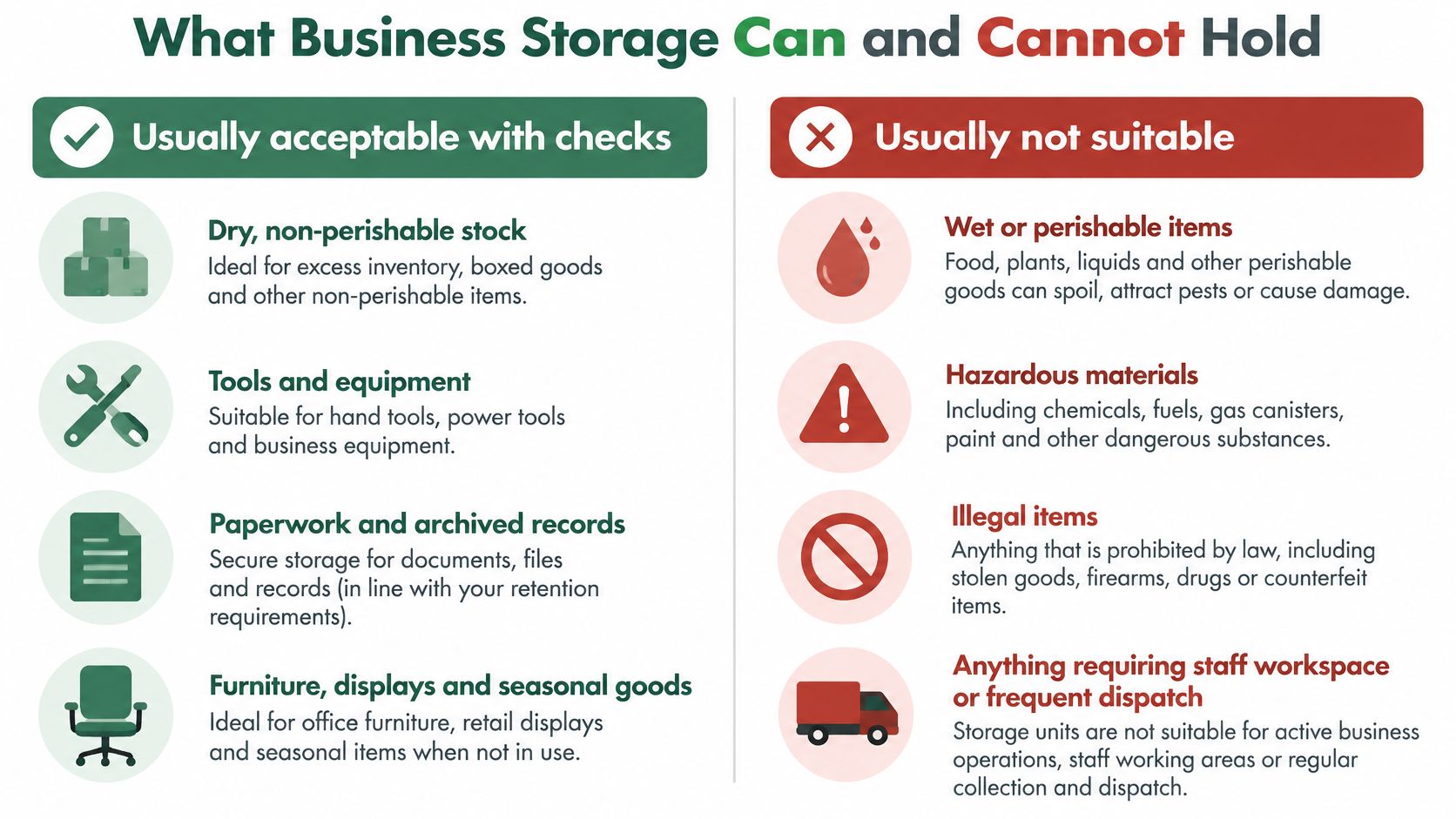
Usually acceptable with checks
- Dry stock: Non-perishable products and packaging.
- Tools and equipment: Trade kit, spares and display stands.
- Paperwork: Archived files, furniture and seasonal goods.
- Palletised goods: Check handling limits through pallet storage options.
Usually restricted or unsuitable
- Prohibited goods: Anything illegal, dangerous, flammable, perishable or living, or anything that could damage the property or other customers' goods.
- Hazards to confirm: Fuel, gas cylinders, paints, solvents and batteries.
- Working activities: Staffed working, manufacturing, trade sales, customer collections and frequent deliveries may need planning permission, landlord consent or specialist facilities.
Records need discipline. GOV.UK archiving guidance states VAT records generally need to be retained for six years, while company accounting records must usually be kept for six years from the end of the relevant financial year. The ICO data storage advice requires personal data to be kept only as long as necessary, so label each box with an owner, category and disposal date.
Off-site records can support continuity, since the Nottingham and Nottinghamshire Community Risk Register identifies flooding as a risk capable of destroying business possessions and interrupting trading. Storage isn't resilience without an inventory, insurance and a retrieval priority list.
Frequently Asked Questions About Business Storage
Is business self storage cheaper than warehouse rental in Nottingham?
Usually, for small amounts of static stock over short periods, because rent is lower and utilities, repairs and long commitments are limited. The gap narrows when frequent trips, extra units or separate workspace are added. Compare total cost over the same period, including deposits, insurance, transport and staff time.
Can a small business store stock in a self storage unit?
Yes, where the agreement permits business goods and the stock is dry, legal and non-perishable. Boxed products, packaging, displays and seasonal overflow suit small business storage in Nottingham when retrieval is occasional. Anything illegal, dangerous, flammable or perishable cannot go in at all.
Can an e-commerce business operate from a storage unit?
Partly. Storing products and collecting small batches for packing elsewhere usually fits a storage agreement. Staffed picking and packing, customer collections, daily courier handovers and using the unit as a workplace may not, so an online seller who needs people working beside stock all day should look at premises designed for that activity.
Do businesses have to pay business rates on a storage unit?
It depends on how the space is occupied and what the agreement says, so treat it as a line in the comparison table above and confirm the figure with the local council or Valuation Office Agency before signing.
Can tradespeople store tools and equipment in self storage?
Yes, tools, materials and spare parts are a common fit when the agreement allows them and no prohibited liquids or gases are included. Drive-up loading helps with heavy tools. A unit works for storing kit, but cutting, repairs, charging or customer visits need separate premises and consent.
What happens when a business needs more storage space?
The usual options are moving to a larger unit or adding another unit, subject to availability, notice and agreement terms. Some facilities stock only a couple of container sizes, so growth there means taking a second unit rather than swapping for a bigger one. That flexibility suits seasonal peaks and uncertain growth, but repeated upsizing or staff travelling for every order means warehouse space or fulfilment should be priced seriously.
Can deliveries be accepted at a business storage facility?
Only where the facility expressly allows deliveries and someone authorised can receive them within access rules. Confirm vehicle size, timing, signing arrangements and where goods may be left before giving suppliers the address, because frequent pallet deliveries or unattended drop-offs sit outside what a standard storage agreement covers.
Choose Between Storage and a Warehouse Near Nottingham
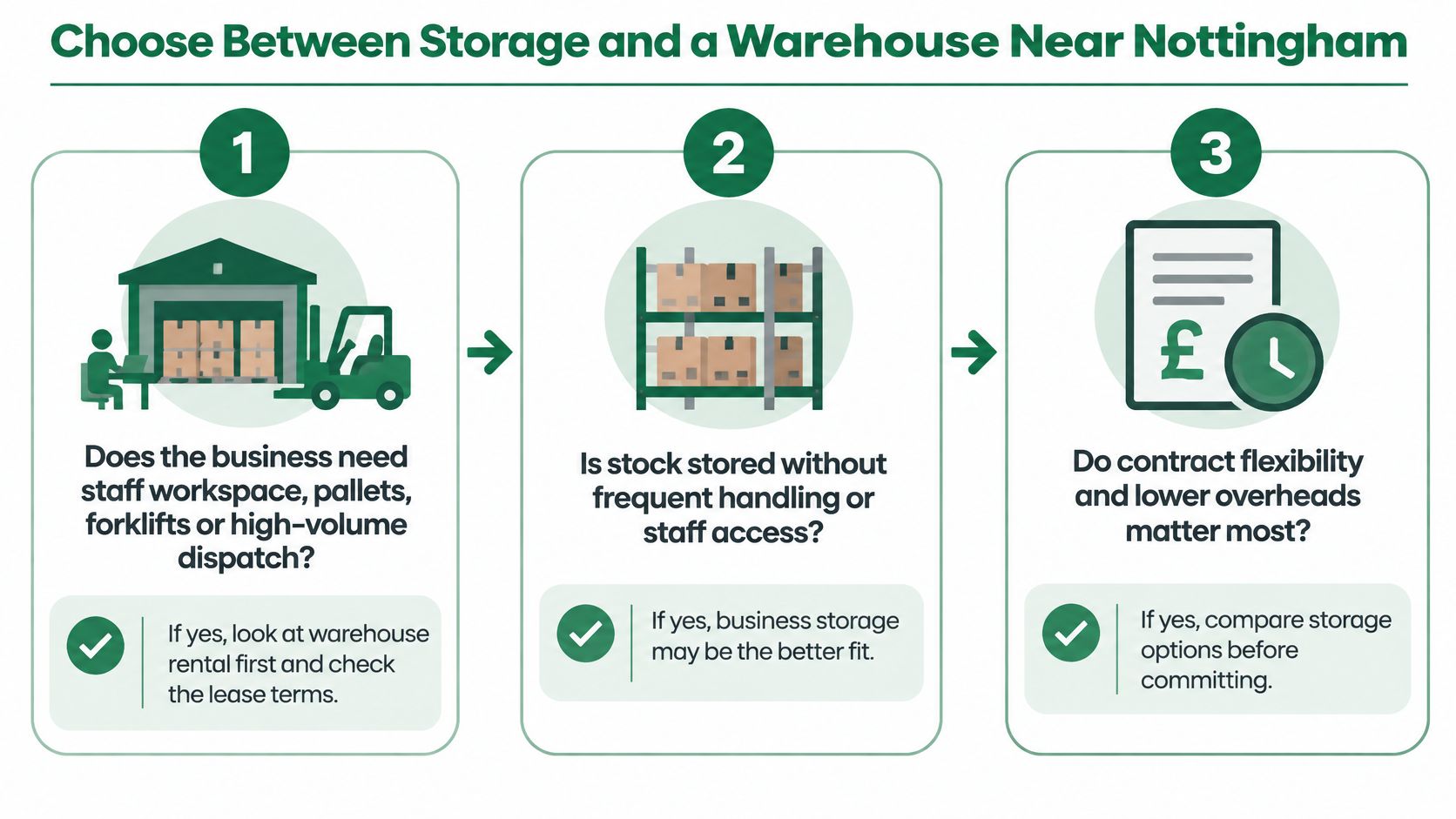
- Staff, pallets, forklifts or high-volume dispatch needed? Price warehouse rental first and check break clauses, repairs and permitted use.
- Stock boxed and retrieved occasionally? Flexible business storage in Nottingham is likely to fit if nothing is worked on or sold from the unit.
- Commitment must stay flexible? Compare minimum terms, notice periods and the cost of changing unit size.
In March 2026, Nottingham had 12,375 VAT- or PAYE-registered businesses, according to State Integrity's compilation of local ONS statistics. That scale means suitable space is contested, so test the actual van route at working hours before signing. Saxondale Self Storage has sites at St James Business Park in Radcliffe on Trent and Upper Saxondale Business Park in Upper Saxondale.
How Saxondale Can Support Local Businesses
For firms that pass the storage test, Saxondale Self Storage offers flexible business storage for stock, equipment and records without taking larger premises early. Businesses can store stock, tools and equipment on the same flexible terms as other customers, and business customers can use units for pallets and trolleys with drive-up loading.
Start with the Radcliffe on Trent location details at St James Business Park, then confirm these points in writing before enquiring.
- Commitment: Minimum term, notice period and deposit.
- Access: Hours, vehicle limits and delivery rules.
- Protection: Insurance requirements and permitted use.
Compare those written terms against the warehouse quote on total cost, not headline rent. Explore Business Storage at Saxondale once the operational fit is clear.
Saxondale Self Storage provides drive-up container units near Nottingham for business stock, tools, equipment and records on flexible terms, giving growing firms space without a warehouse lease. Check sizes, confirm permitted use and access for the goods involved, then visit Saxondale Self Storage to explore business storage at Saxondale and request a viewing.